
Summary: The Business Case in Brief
The time when sustainability was a “nice to have,” or a paragraph in the annual report, is definitively over. By 2026, listed and large companies are obliged to report on their sustainability impact under the European CSRD directive (Corporate Sustainability Reporting Directive). But smaller architectural firms and contractors are also noticing the shift: governments, municipalities, and housing associations are increasingly demanding concrete, measurable evidence of CO2 reduction in tenders (via criteria such as MVI - Socially Responsible Procurement and the CO2 Performance Ladder). Your printer fleet is a surprisingly easy and effective place to score on these goals. Old plotters are large, heavy (lots of steel/transport costs), and energy guzzlers that produce heat in the corner. The HP DesignJet (e.g., the T650) Studio, T200, and T600 series represent a trend break. They are the first officially certified “Net Carbon Neutral” plotters in the world. They are designed from the ground up with the planet in mind, without compromising at all on performance or aesthetics. For architects who preach “green building,” a green printer is an absolute credibility must.
The Innovation: Design with Impact
HP has reevaluated the entire life cycle of the printer, from the initial design to the “End of Life” phase. This is not “Greenwashing,” but verifiable system change.
1. Ocean Plastic and Circular Materials
The printers are made of up to 30% recycled plastic (PCR - Post-Consumer Recycled content).
- A significant portion of this is specifically “Ocean-bound plastic”. These are plastic bottles and packaging collected on beaches and in waterways in countries like Haiti and Indonesia, before they could drift into the ocean.
- HP buys this plastic, cleans it, and processes it into high-quality granules for your printer’s casing.
- By using this material, HP closes the loop (Circular Economy) and prevents microplastics from ending up in our food chain. When you look at your printer, you are essentially looking at ~20 recycled bottles.
2. Carbon Neutral Certification
Even with recycling, production and transport cost energy (mining for metals, assembly, ship, truck).
- HP calculates the exact carbon footprint (LCA - Life Cycle Assessment) of each individual printer, including the estimated energy consumption during use.
- HP fully compensates the remaining CO2 emissions from production, packaging, transport, and use.
- This is done by investing in independently verified forest protection projects (REDD+ projects in, for example, Brazil or Madagascar) that actively remove CO2 from the air.
- The result: You receive a Carbon Neutral certificate with the printer. You can directly include this certificate in your own sustainability report or submit it as evidence with tender documents.
3. Energy Efficiency (Energy Star 3.0 & EPEAT Gold)
Old printers consumed a lot of power, even in standby. They stayed warm 24/7 to keep the ink fluid.
- The new HP DesignJet (e.g., the T650) Studio series is extremely efficient. They meet the strictest Energy Star 3.0 requirements.
- They turn on and off smartly and use < 5 Watts in sleep mode.
- More importantly: They use up to 95% less ink and energy for automatic maintenance tasks (printhead cleaning) than older generations. Old printers daily flushed milliliters of expensive ink into the waste tank; these printers do it with fractions of a drop. That saves chemical waste and money.
Business Fundamentals: Winning Tenders with Green
More and more clients (especially government, but also large corporates such as banks and real estate developers) weigh sustainability heavily in the award of contracts (Awarding on Value / BPKS).
- With a fleet of sustainable printers, you score concrete points on the MVI ladder (Environmental Cost Indicator) or CO2 Performance Ladder.
- It shows that you have your entire supply chain (so-called Scope 3 emissions, the emissions of your suppliers) in order and proactively manage it.
- In a competitive market where prices are close together, this sustainability advantage can just make the difference between winning or losing the assignment. It is a USP (Unique Selling Point) in your marketing: “We design sustainably, and we work sustainably.”
Europlan Service: HP Planet Partners (Closed Loop)
Sustainability does not stop at the purchase. The real impact is in the use (consumables). What do you do with the empty cartridges and the old printhead after use?
- NEVER throw them in the residual waste bin. Ink residues are chemical waste, and the plastic takes 400 years to break down.
- Via the HP Planet Partners program (which we facilitate as a Europlan Platinum Partner), you can request free return boxes with your order.
- HP collects these boxes from you for free when they are full.
- Closed Loop Recycling: In specialized facilities (including in Germany), the cartridges are ground up. The plastic is separated, cleaned, and mixed with recycled plastic from bottles. New cartridges are made from this.
- Nothing goes to the landfill (“Zero Waste to Landfill”).
- Europlan can arrange this logistically for you, so you don’t have to worry about it (“Complete Relief”). We report annually how many kilos you have recycled.
Conclusion: Practice What You Preach
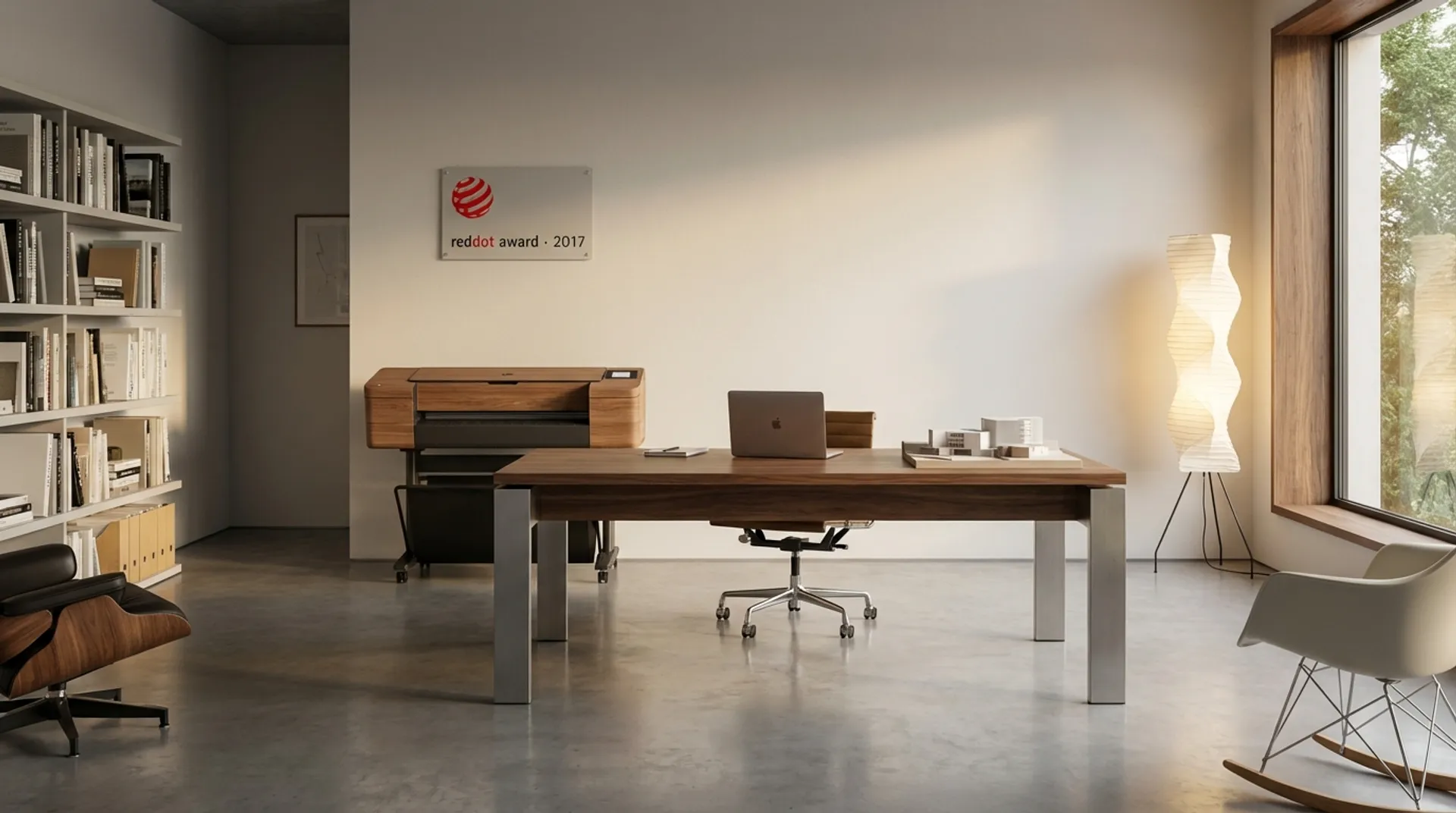
If you, as an architectural firm or builder, design buildings that must be BREEAM Outstanding or LEED Platinum certified, you simply cannot morally print those drawings on a polluting, energy-guzzling machine from 2010. Your credibility is at stake. The HP DesignJet Studio is a statement in your office. It is beautiful (won Red Dot Design Awards), it is technologically superior, and it is green. It is an investment that pays for itself in energy, ink, and reputation.
Would you like to know more about the carbon footprint of our products or a calculation of your potential CO2 savings?
Read also
- Printing on Blueback Paper: The Cost-Effective Choice for Outdoor Advertising
- Offset vs. Digital: The Tipping Point: When Does Digital Printing Become Cheaper Than Offset?
- Product/Solution: learn more about our service & advice
Download the HP Sustainability Whitepaper and request our CO2 scan